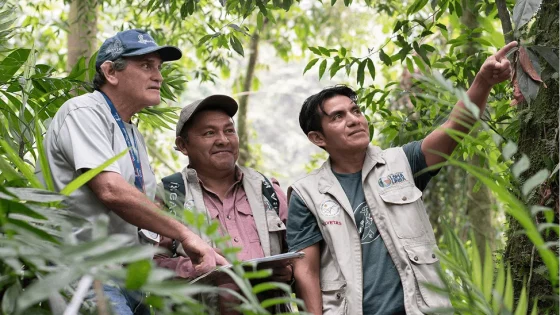

The community of Loma Linda was founded in 1976 and is located in the municipality of El Palmar, Quetzaltenango. It currently has approximately 3,000 inhabitants.
In terms of organization, the first community efforts focused on forming the Loma Linda Integrated Agricultural Cooperative, whose main goal was to work toward land tenure. Later, the Mundo Verde Association was created, aimed at strengthening local coffee production.
Over time, and given the need to diversify the local economy and community services, the organization of young people was promoted, leading to the creation of the ASODILL Association.
This initiative built on previous efforts and complemented them with the development of community-based ecotourism, drawing on the forests, rivers, and wealth of wildlife in the community. The aim was to promote the conservation of natural resources while at the same time generating new economic opportunities through community tourism, grounded in the environmental diversity that characterizes the area.
During its first years of operation, the Association faced various limitations, including the lack of adequate infrastructure to receive visitors and the absence of technical know-how for efficiently managing and delivering tourism services. In its early days, the offering was limited to trail walks. However, strategic alliances were forged that helped strengthen the organization.
In 2008, FUNDAP’s support began, which marked a turning point in shaping the ecotourism project — starting with the legalization of the organization. Later on, forestry management processes were incorporated, including topographic surveys and management plans, with the goal of accessing INAB’s forestry incentive programs.
As a result, today there are 66 hectares of forest under protection, which are home to roughly 280 identified bird species, as well as a wide variety of native species. In 2022, the community earned first place nationally at the Forestry Prize, in the protection forests category.
The revenue generated by forestry incentives has been reinvested in strengthening tourism infrastructure, improving access to productive areas, and conserving the forests. We have also maintained joint work with FUNDAP, receiving technical assistance and training in activities such as firebreak patrols and forest monitoring, in addition to ongoing coordination to bring new areas into INAB’s programs.
Forest conservation goes beyond economic benefit; it represents a fundamental commitment to ecological balance. Forests are essential for generating oxygen, protecting water sources, and conserving biodiversity, benefiting both the flora and the fauna of the region.
Today, the Loma Linda Association offers lodging, trail walks, a pool area, and adventure activities. These achievements have been possible thanks to the joint effort of the community and the support of various institutions committed to environmental conservation.